

← Back to Blog
education

The 5 Trading Metrics That Actually Predict Profitability

Stop obsessing over win rate. These five metrics tell you whether your trading is actually sustainable long-term.

TradeDeck TeamApril 13, 20268 min read
The 5 Trading Metrics That Actually Predict Profitability
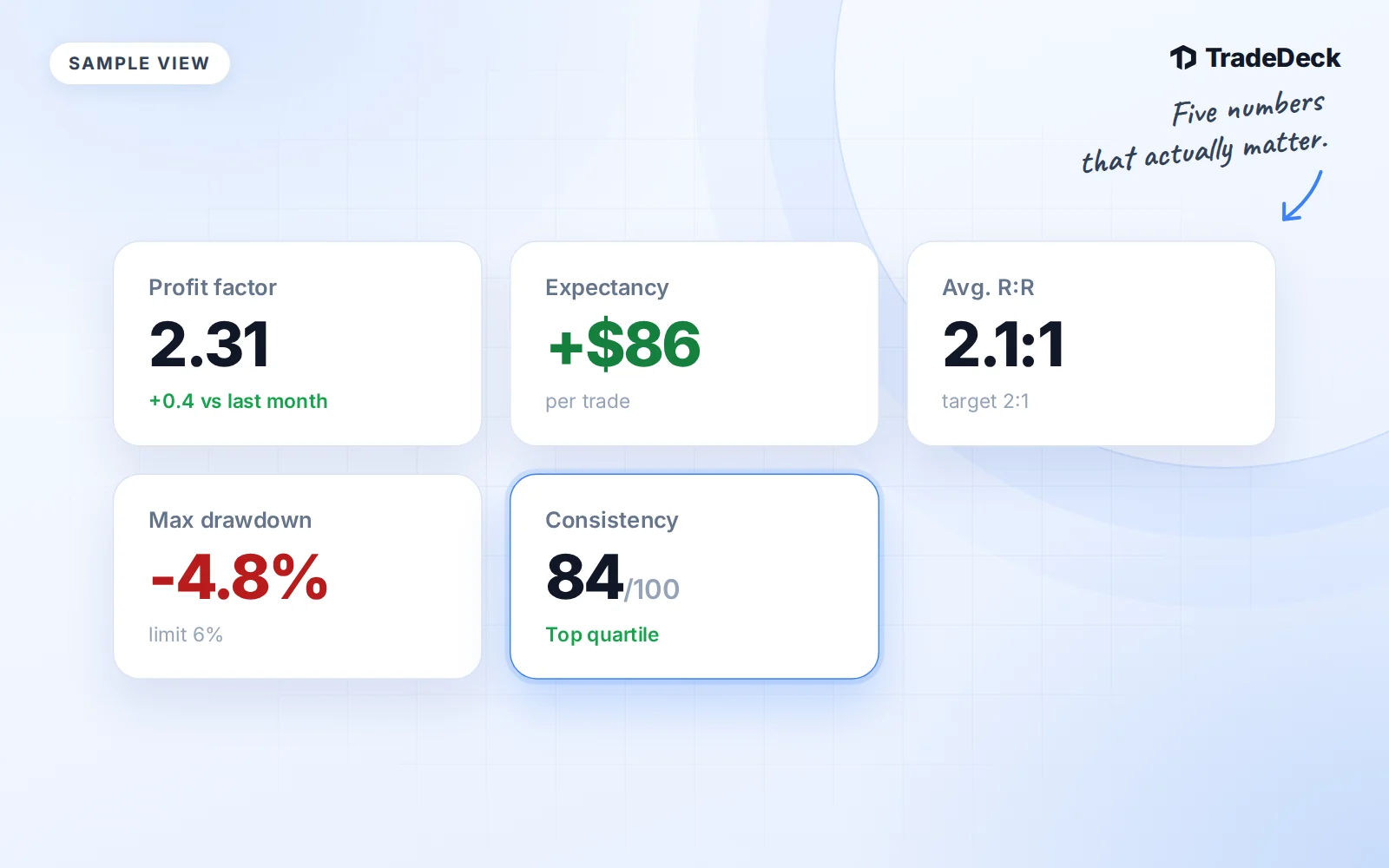
If you only read one dashboard panel each week, read expectancy and profit factor. Those two will tell you more than social media style win rate screenshots. Most traders start with motivation and lose consistency because the process stays vague. A professional journal removes guesswork. It shows which setups create expectancy, which symbols fit your style, and when discipline fails. ## Metric 1: Profit Factor Start with win rate, then layer deeper metrics. Gross profit divided by gross loss. Above 1.5 is solid, above 2.0 is strong. Practical detail matters here. Think about a monthly review by setup and session. If your journal cannot capture context, setup tag, and risk plan in one place, review quality drops quickly. Traders often blame mindset first, but weak data structure is usually the hidden problem. Use concrete numbers when you review. For performance analytics, profit factor above 1.5 and positive expectancy are stronger than headline win rate. Log your planned stop, actual stop, and slippage in dollars. That single habit reveals whether losses come from bad reads or from poor execution discipline. Run a repeatable loop: log right after each trade, run a 10 minute end of day review, then do a deeper weekly review on Saturday. Compare setups by symbol, by time window, and by market regime. Patterns like overtrading after lunch or revenge trades after an early stop become obvious. ## Metric 2: Expectancy Average dollars per trade. Positive expectancy means your process has edge over time. Practical detail matters here. Think about a monthly review by setup and session. If your journal cannot capture context, setup tag, and risk plan in one place, review quality drops quickly. Traders often blame mindset first, but weak data structure is usually the hidden problem. Use concrete numbers when you review. For performance analytics, profit factor above 1.5 and positive expectancy are stronger than headline win rate. Log your planned stop, actual stop, and slippage in dollars. That single habit reveals whether losses come from bad reads or from poor execution discipline. Run a repeatable loop: log right after each trade, run a 10 minute end of day review, then do a deeper weekly review on Saturday. Compare setups by symbol, by time window, and by market regime. Patterns like overtrading after lunch or revenge trades after an early stop become obvious. ## Metric 3: Average R:R Average winner size versus average loser size. You do not need huge win rate if this stays healthy. Practical detail matters here. Think about a monthly review by setup and session. If your journal cannot capture context, setup tag, and risk plan in one place, review quality drops quickly. Traders often blame mindset first, but weak data structure is usually the hidden problem. Use concrete numbers when you review. For performance analytics, profit factor above 1.5 and positive expectancy are stronger than headline win rate. Log your planned stop, actual stop, and slippage in dollars. That single habit reveals whether losses come from bad reads or from poor execution discipline. Run a repeatable loop: log right after each trade, run a 10 minute end of day review, then do a deeper weekly review on Saturday. Compare setups by symbol, by time window, and by market regime. Patterns like overtrading after lunch or revenge trades after an early stop become obvious. ## Metric 4: Max Drawdown Know how deep your down cycles go. This is critical for prop firm limits. Practical detail matters here. Think about a monthly review by setup and session. If your journal cannot capture context, setup tag, and risk plan in one place, review quality drops quickly. Traders often blame mindset first, but weak data structure is usually the hidden problem. Use concrete numbers when you review. For performance analytics, profit factor above 1.5 and positive expectancy are stronger than headline win rate. Log your planned stop, actual stop, and slippage in dollars. That single habit reveals whether losses come from bad reads or from poor execution discipline. Run a repeatable loop: log right after each trade, run a 10 minute end of day review, then do a deeper weekly review on Saturday. Compare setups by symbol, by time window, and by market regime. Patterns like overtrading after lunch or revenge trades after an early stop become obvious. ## Metric 5: Consistency Score Pair this with execution scoring. A smooth equity path is more reliable than one big outlier week. Trading performance metrics in TradeDeck

Five core metrics in one analytics view

Dashboard consistency view

Consistency matters as much as headline P&L

Practical detail matters here. Think about a monthly review by setup and session. If your journal cannot capture context, setup tag, and risk plan in one place, review quality drops quickly. Traders often blame mindset first, but weak data structure is usually the hidden problem. Use concrete numbers when you review. For performance analytics, profit factor above 1.5 and positive expectancy are stronger than headline win rate. Log your planned stop, actual stop, and slippage in dollars. That single habit reveals whether losses come from bad reads or from poor execution discipline. Run a repeatable loop: log right after each trade, run a 10 minute end of day review, then do a deeper weekly review on Saturday. Compare setups by symbol, by time window, and by market regime. Patterns like overtrading after lunch or revenge trades after an early stop become obvious.

Ready to start tracking your trades?

Get Started Free

Related posts