

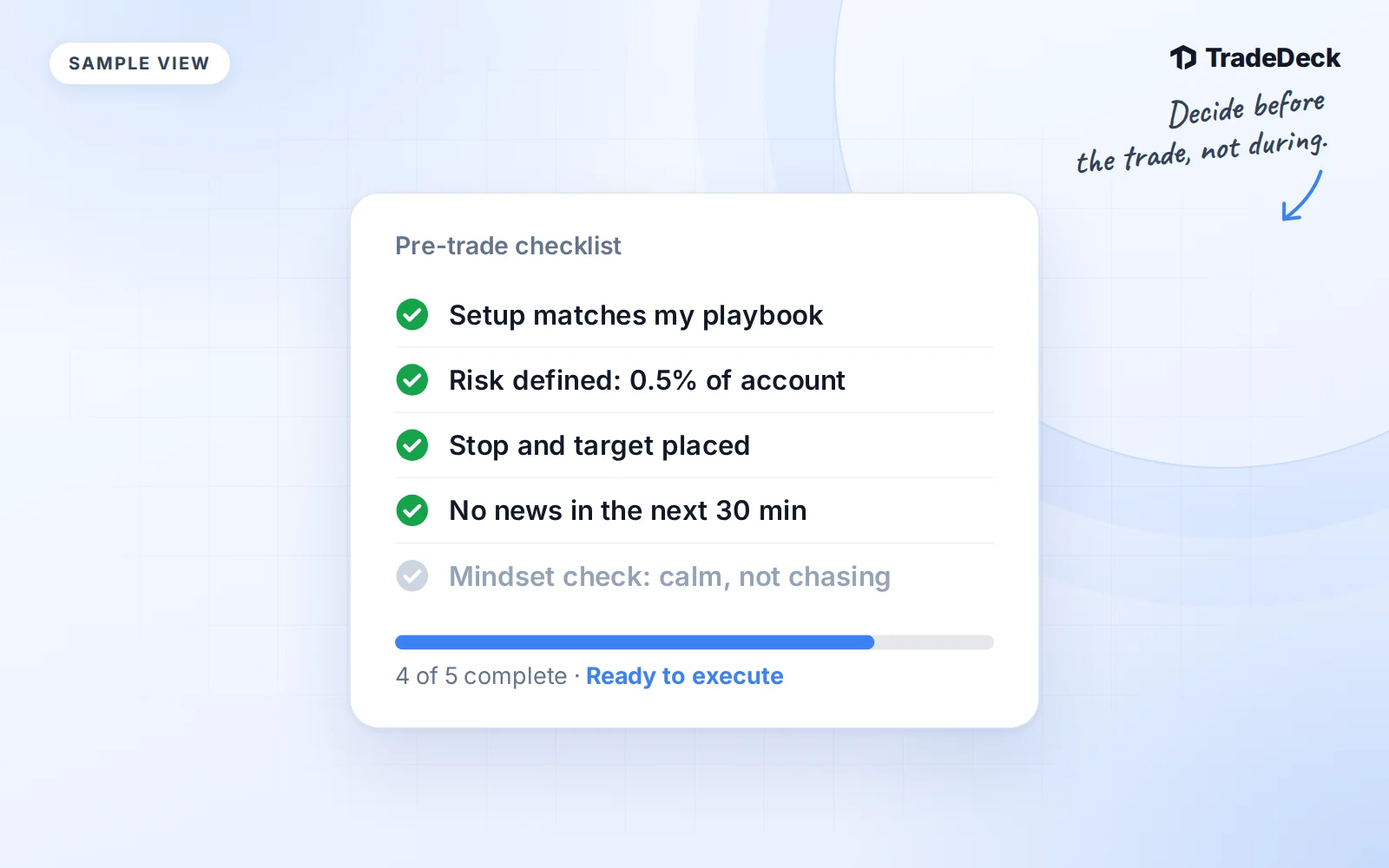
Checklists work because they remove mood from decision making. Pilots and surgeons use them for the same reason traders should.
Most traders start with motivation and lose consistency because the process stays vague. A professional journal removes guesswork. It shows which setups create expectancy, which symbols fit your style, and when discipline fails.
## Three Checklist Blocks
Pre-market prep, entry criteria, and management rules. If a trade fails one key item, skip it.
Practical detail matters here. Think about checking calendar before FOMC and CPI days. If your journal cannot capture context, setup tag, and risk plan in one place, review quality drops quickly. Traders often blame mindset first, but weak data structure is usually the hidden problem.
Use concrete numbers when you review. For pre market routine, cutting size to 50 percent on event days can reduce drawdown volatility. Log your planned stop, actual stop, and slippage in dollars. That single habit reveals whether losses come from bad reads or from poor execution discipline.
Run a repeatable loop: log right after each trade, run a 10 minute end of day review, then do a deeper weekly review on Saturday. Compare setups by symbol, by time window, and by market regime. Patterns like overtrading after lunch or revenge trades after an early stop become obvious.
## Examples
Day trader list can be five quick checks around liquidity, setup quality, risk cap, and news. Futures scalpers may add session and spread checks.
Practical detail matters here. Think about checking calendar before FOMC and CPI days. If your journal cannot capture context, setup tag, and risk plan in one place, review quality drops quickly. Traders often blame mindset first, but weak data structure is usually the hidden problem.
Use concrete numbers when you review. For pre market routine, cutting size to 50 percent on event days can reduce drawdown volatility. Log your planned stop, actual stop, and slippage in dollars. That single habit reveals whether losses come from bad reads or from poor execution discipline.
Run a repeatable loop: log right after each trade, run a 10 minute end of day review, then do a deeper weekly review on Saturday. Compare setups by symbol, by time window, and by market regime. Patterns like overtrading after lunch or revenge trades after an early stop become obvious.
1. Open your journal and create one tag for your primary setup.
2. Log one recent trade with exact entry, stop, target, and screenshot.
3. Write one note: planned outcome, actual outcome, lesson.
4. Review five similar trades and calculate win rate, average R, and hold time.
5. Keep one rule change for next week, do not change five rules at once.
## Build Discipline
If consistency slips, review why your journal not working.
Check items before entry, not after the fact. Review compliance weekly and tighten weak points.
Practical detail matters here. Think about checking calendar before FOMC and CPI days. If your journal cannot capture context, setup tag, and risk plan in one place, review quality drops quickly. Traders often blame mindset first, but weak data structure is usually the hidden problem.
Use concrete numbers when you review. For pre market routine, cutting size to 50 percent on event days can reduce drawdown volatility. Log your planned stop, actual stop, and slippage in dollars. That single habit reveals whether losses come from bad reads or from poor execution discipline.
Run a repeatable loop: log right after each trade, run a 10 minute end of day review, then do a deeper weekly review on Saturday. Compare setups by symbol, by time window, and by market regime. Patterns like overtrading after lunch or revenge trades after an early stop become obvious.
1. Open your journal and create one tag for your primary setup.
2. Log one recent trade with exact entry, stop, target, and screenshot.
3. Write one note: planned outcome, actual outcome, lesson.
4. Review five similar trades and calculate win rate, average R, and hold time.
5. Keep one rule change for next week, do not change five rules at once.
## TradeDeck Support
Daily checklist and execution scoring let you connect your process to outcomes.
Checklist keeps your process visible
Score each trade against your rules
Practical detail matters here. Think about checking calendar before FOMC and CPI days. If your journal cannot capture context, setup tag, and risk plan in one place, review quality drops quickly. Traders often blame mindset first, but weak data structure is usually the hidden problem.
Use concrete numbers when you review. For pre market routine, cutting size to 50 percent on event days can reduce drawdown volatility. Log your planned stop, actual stop, and slippage in dollars. That single habit reveals whether losses come from bad reads or from poor execution discipline.
Run a repeatable loop: log right after each trade, run a 10 minute end of day review, then do a deeper weekly review on Saturday. Compare setups by symbol, by time window, and by market regime. Patterns like overtrading after lunch or revenge trades after an early stop become obvious.