

← Back to Blog
education

Why Your Trading Journal Isn't Working (And How to Fix It)

You've been journaling for months and your trading hasn't improved. Here are the five most common reasons and what to do instead.

TradeDeck TeamApril 15, 20267 min read
Why Your Trading Journal Isn't Working (And How to Fix It)
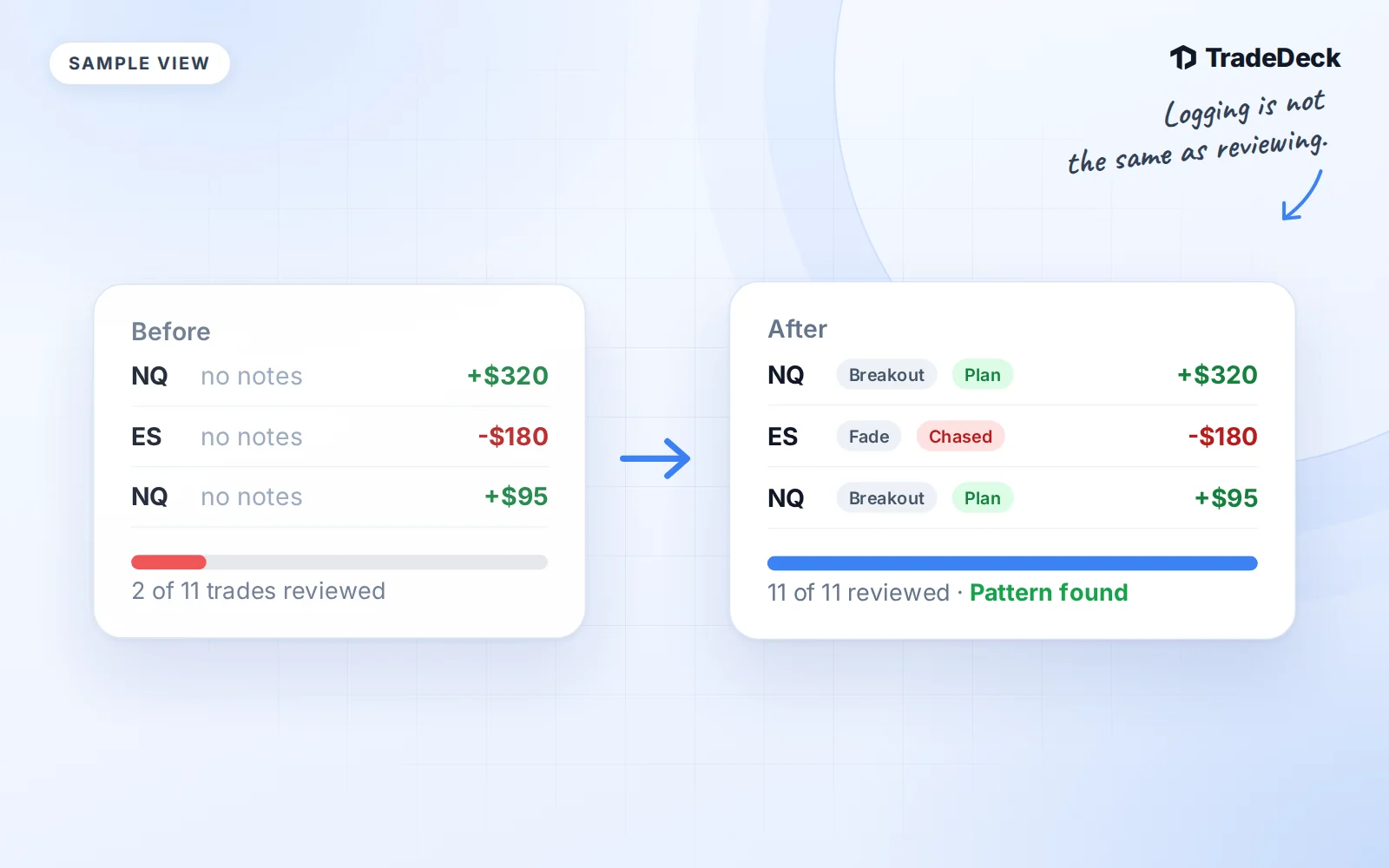
If your journal is not improving results, the issue is usually review quality, not logging volume. Most traders start with motivation and lose consistency because the process stays vague. A professional journal removes guesswork. It shows which setups create expectancy, which symbols fit your style, and when discipline fails. ## Mistake 1 You log trades but never review them. A journal you do not revisit is a record, not a feedback loop. Practical detail matters here. Think about a revenge trade after a red open. If your journal cannot capture context, setup tag, and risk plan in one place, review quality drops quickly. Traders often blame mindset first, but weak data structure is usually the hidden problem. Use concrete numbers when you review. For journal review workflow, two impulsive trades at -$120 each can erase a disciplined +$180 morning. Log your planned stop, actual stop, and slippage in dollars. That single habit reveals whether losses come from bad reads or from poor execution discipline. Run a repeatable loop: log right after each trade, run a 10 minute end of day review, then do a deeper weekly review on Saturday. Compare setups by symbol, by time window, and by market regime. Patterns like overtrading after lunch or revenge trades after an early stop become obvious. ## Mistake 2 You only log winners. Losses hold the clearest clues about process gaps. Practical detail matters here. Think about a revenge trade after a red open. If your journal cannot capture context, setup tag, and risk plan in one place, review quality drops quickly. Traders often blame mindset first, but weak data structure is usually the hidden problem. Use concrete numbers when you review. For journal review workflow, two impulsive trades at -$120 each can erase a disciplined +$180 morning. Log your planned stop, actual stop, and slippage in dollars. That single habit reveals whether losses come from bad reads or from poor execution discipline. Run a repeatable loop: log right after each trade, run a 10 minute end of day review, then do a deeper weekly review on Saturday. Compare setups by symbol, by time window, and by market regime. Patterns like overtrading after lunch or revenge trades after an early stop become obvious. ## Mistake 3 You write too much and tag too little. Keep notes short and make setup tags mandatory. Practical detail matters here. Think about a revenge trade after a red open. If your journal cannot capture context, setup tag, and risk plan in one place, review quality drops quickly. Traders often blame mindset first, but weak data structure is usually the hidden problem. Use concrete numbers when you review. For journal review workflow, two impulsive trades at -$120 each can erase a disciplined +$180 morning. Log your planned stop, actual stop, and slippage in dollars. That single habit reveals whether losses come from bad reads or from poor execution discipline. Run a repeatable loop: log right after each trade, run a 10 minute end of day review, then do a deeper weekly review on Saturday. Compare setups by symbol, by time window, and by market regime. Patterns like overtrading after lunch or revenge trades after an early stop become obvious. ## Mistake 4 and 5 No setup categories and spreadsheet friction both reduce consistency. Reduce effort and increase structure. Practical detail matters here. Think about a revenge trade after a red open. If your journal cannot capture context, setup tag, and risk plan in one place, review quality drops quickly. Traders often blame mindset first, but weak data structure is usually the hidden problem. Use concrete numbers when you review. For journal review workflow, two impulsive trades at -$120 each can erase a disciplined +$180 morning. Log your planned stop, actual stop, and slippage in dollars. That single habit reveals whether losses come from bad reads or from poor execution discipline. Run a repeatable loop: log right after each trade, run a 10 minute end of day review, then do a deeper weekly review on Saturday. Compare setups by symbol, by time window, and by market regime. Patterns like overtrading after lunch or revenge trades after an early stop become obvious. ## Fix Reset with how to journal and track progress on a performance calendar. Automate imports, score execution, and run weekly pattern review. Journal review analytics

Pattern review shows where results leak

Notebook and rules

Keep rules and review notes together

Practical detail matters here. Think about a revenge trade after a red open. If your journal cannot capture context, setup tag, and risk plan in one place, review quality drops quickly. Traders often blame mindset first, but weak data structure is usually the hidden problem. Use concrete numbers when you review. For journal review workflow, two impulsive trades at -$120 each can erase a disciplined +$180 morning. Log your planned stop, actual stop, and slippage in dollars. That single habit reveals whether losses come from bad reads or from poor execution discipline. Run a repeatable loop: log right after each trade, run a 10 minute end of day review, then do a deeper weekly review on Saturday. Compare setups by symbol, by time window, and by market regime. Patterns like overtrading after lunch or revenge trades after an early stop become obvious.

Ready to start tracking your trades?

Get Started Free

Related posts